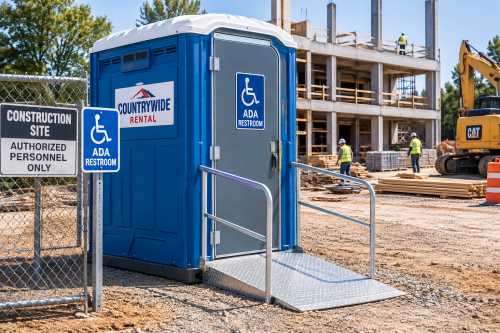
ADA-Compliant Restrooms for Construction Sites: A Must-Have Checklist
Construction sites aren't exempt from accessibility requirements. Whether it's a visiting inspector, an accessible-needs worker, or a public-facing project, having ADA-compliant restrooms on site isn't just good practice — it can be a legal requirement tied to your permits and OSHA obligations. Here's the checklist to get it right.
When ADA Restrooms Are Required on a Job Site
• The project is publicly funded (federal, state, or municipal contracts almost always require it)
• The site has visiting inspectors, engineers, or public officials who may need accessible facilities
• Any employee or subcontractor requires accommodation under the ADA
• Local permitting authorities mandate it as a condition of the building permit
Even when not strictly mandated, many contractors default to ADA units to avoid delays, complaints, or compliance issues mid-project.
Common Mistakes to Avoid
• Placing the ADA unit on gravel or an incline — this defeats the purpose even if the unit itself is compliant
• Assuming one unit covers a large site — big sites may need multiple accessible units at different work zones
• Skipping documentation — if a project is publicly funded or under inspection, you'll want proof of compliance readily available
• Forgetting seasonal changes — mud, ice, and snow can turn a compliant path into an inaccessible one; plan for site conditions year-round
Choosing a Rental Provider
Look for a company that can confirm current ADA standards compliance, provide documentation for your project files, and help with placement guidance for uneven or active job sites. A provider familiar with construction and government contracts will already know what inspectors look for.
Conclusion
An ADA-compliant restroom on a construction site is about more than checking a box — it's the unit, the placement, the maintenance, and the paperwork working together. Use this checklist before your next rental to make sure your site stays compliant and inspection ready.
Tags:
ada portable toilet, ada restroom, ada bathroom